
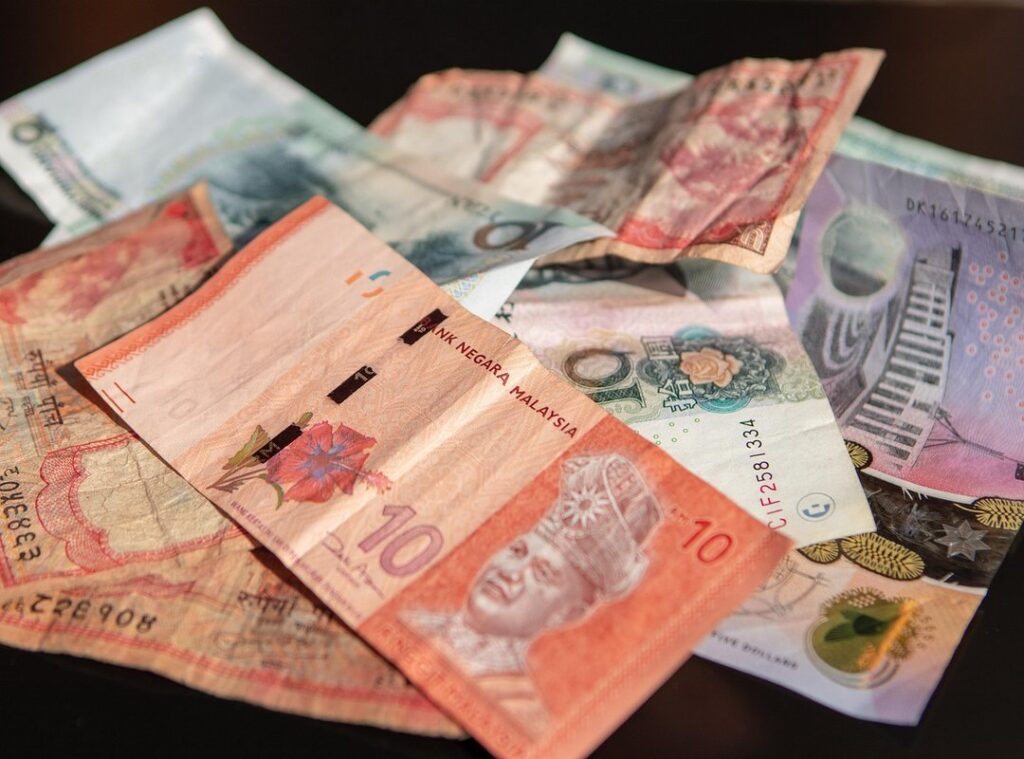
Currently, 1400 Malaysian Ringgit converts to approximately [current value] Indonesian Rupiah. This number isn’t static and changes daily, sometimes even by the minute.
I know you’re probably wondering why it fluctuates so much. Well, this article will not only give you the current conversion but also explain why it changes. And trust me, understanding this can save you a lot of money whether you’re traveling, shopping online, or sending funds to family.
Currency conversion can seem confusing, but it doesn’t have to be. This guide is based on practical financial knowledge, designed to make the process simple and clear for everyone.
Breaking Down the Current MYR to IDR Exchange Rate
Let’s start with the basics. An exchange rate is simply the value of one country’s currency in relation to another’s. It’s like saying how many Indonesian Rupiah (IDR) you get for one Malaysian Ringgit (MYR).
You might have heard of the ‘mid-market rate.’ This is the real exchange rate without any fees, which is what you see on Google or financial news sites. It’s the midpoint between the buy and sell rates.
Now, when you go to a bank or money changer, the rate you get is different. Why? Because they charge a ‘spread’ or commission for their service.
This spread is how they make money.
For example, if the mid-market rate is 1 MYR = 3,500 IDR, a money changer might sell it to you for 3,550 IDR and buy it from you for 3,450 IDR. The key to a good deal is finding the smallest difference between the mid-market rate and the rate you’re offered.
Some people argue that banks and money changers are taking advantage of customers. But let’s be real. They need to cover their costs and make a profit.
Without them, exchanging currencies would be a lot harder and more expensive for everyone.
Another point to consider: the MYR/IDR rate can be volatile. It changes frequently, so it’s important to check rates often. If you’re planning to convert 1400 ringgit berapa rupiah, you’ll want to know the current rate to get the best deal.
In summary, while the spread can seem unfair, it’s a necessary part of the system. Just make sure to shop around and find the best rate available.
A Simple Step-by-Step Guide to Convert Ringgit to Rupiah
Converting currency can seem tricky, but it’s actually pretty straightforward. Let’s break it down.
First, here’s the formula for manual calculation:
Amount in Rupiah = 1400 x (Current Ringgit to Rupiah exchange rate).
Now, let’s walk through a detailed example. If 1 MYR = 3,510 IDR, then 1400 MYR would be 1400 * 3,510 = 4,914,000 IDR. Simple, right?
Here’s a quick reference table for other common amounts:
- 1 MYR = 3,510 IDR
- 100 MYR = 351,000 IDR
- 500 MYR = 1,755,000 IDR
- 1000 MYR = 3,510,000 IDR
This table gives you a good idea of what different amounts look like in Rupiah.
Online currency converter tools are the fastest and most accurate method for checking the live mid-market rate. Tools like Google Finance, XE.com, and OANDA are great for this.
To use an online converter, simply select MYR as the ‘from’ currency, IDR as the ‘to’ currency, and enter 1400. It’s that easy. 1400 ringgit berapa
However, keep in mind that the final amount will differ slightly when exchanging physical cash or sending money. Banks and exchange offices often have their own rates and fees.
So, if you’re wondering 1400 ringgit berapa rupiah, just follow these steps. You’ll get a close estimate, but always double-check with your bank or exchange office for the exact amount.
Why Does the Ringgit to Rupiah Exchange Rate Fluctuate?
Exchange rates are all about supply and demand on the global foreign exchange (forex) market. Simple, right?
Central banks play a big role too. Bank Negara Malaysia and Bank Indonesia make decisions on interest rates, which can push the value of their currencies up or down. Higher interest rates usually mean a stronger currency.
Economic health is another key factor. Things like GDP growth and inflation in each country affect how investors feel. If the economy is doing well, the currency tends to strengthen.
It’s like the stock price of a country—good news makes its ‘stock’ go up.
Commodity prices also matter. For example, palm oil prices can impact the Malaysian Ringgit, while coal and nickel prices affect the Indonesian Rupiah. When these commodity prices rise, the respective currencies often do too.
Political stability is crucial. Major events in either Malaysia or Indonesia can cause short-term volatility. A stable government generally means a more stable currency.
Understanding these factors can help you make better financial decisions. If you’re planning to convert 1400 ringgit berapa rupiah, knowing these trends can help you time your transactions for the best rate.
Where to Find the Best Rates for Your Conversion

When it comes to exchanging currency, you’ve got a few options: licensed money changers, banks, and airport kiosks.
Licensed money changers in competitive urban areas often provide the best rates for physical cash. They have lower overhead costs and can pass those savings on to you.
Banks are another option, but they usually have higher fees and less competitive rates. It’s worth checking, but don’t expect the best deals there.
Airport exchange counters typically offer the worst rates. They know you’re in a hurry and might not have other options, so they add convenience fees. Avoid them if you can.
If you’re sending money electronically between two countries, digital remittance services like Wise and Remitly are excellent, low-cost options. They often beat traditional banks and money changers with their rates and fees.
For example, if you need to convert 1400 ringgit berapa rupiah, using a digital service can save you a lot. Just make sure to compare a few different platforms to get the best deal.
Pro tip: Always check the total cost, including any hidden fees, before making your exchange.
Key Takeaways for Converting Your Currency with Confidence
Converting 1400 ringgit berapa rupiah is a simple multiplication, but the rate you use is crucial. You no longer have to guess the value or accept a bad rate, as you now know how to check the live rate and what factors influence it. By understanding the difference between mid-market rates and offered rates, you can make smarter financial decisions.
Before your next trip or transfer, take 30 seconds to check a live online converter to ensure you’re getting a fair deal.

 Jennifer Brownoraser is the kind of writer who genuinely cannot publish something without checking it twice. Maybe three times. They came to expert insights through years of hands-on work rather than theory, which means the things they writes about — Expert Insights, Upcoming Game Releases, Esports Highlights and Coverage, among other areas — are things they has actually tested, questioned, and revised opinions on more than once.
That shows in the work. Jennifer's pieces tend to go a level deeper than most. Not in a way that becomes unreadable, but in a way that makes you realize you'd been missing something important. They has a habit of finding the detail that everybody else glosses over and making it the center of the story — which sounds simple, but takes a rare combination of curiosity and patience to pull off consistently. The writing never feels rushed. It feels like someone who sat with the subject long enough to actually understand it.
Outside of specific topics, what Jennifer cares about most is whether the reader walks away with something useful. Not impressed. Not entertained. Useful. That's a harder bar to clear than it sounds, and they clears it more often than not — which is why readers tend to remember Jennifer's articles long after they've forgotten the headline.
Jennifer Brownoraser is the kind of writer who genuinely cannot publish something without checking it twice. Maybe three times. They came to expert insights through years of hands-on work rather than theory, which means the things they writes about — Expert Insights, Upcoming Game Releases, Esports Highlights and Coverage, among other areas — are things they has actually tested, questioned, and revised opinions on more than once.
That shows in the work. Jennifer's pieces tend to go a level deeper than most. Not in a way that becomes unreadable, but in a way that makes you realize you'd been missing something important. They has a habit of finding the detail that everybody else glosses over and making it the center of the story — which sounds simple, but takes a rare combination of curiosity and patience to pull off consistently. The writing never feels rushed. It feels like someone who sat with the subject long enough to actually understand it.
Outside of specific topics, what Jennifer cares about most is whether the reader walks away with something useful. Not impressed. Not entertained. Useful. That's a harder bar to clear than it sounds, and they clears it more often than not — which is why readers tend to remember Jennifer's articles long after they've forgotten the headline.