
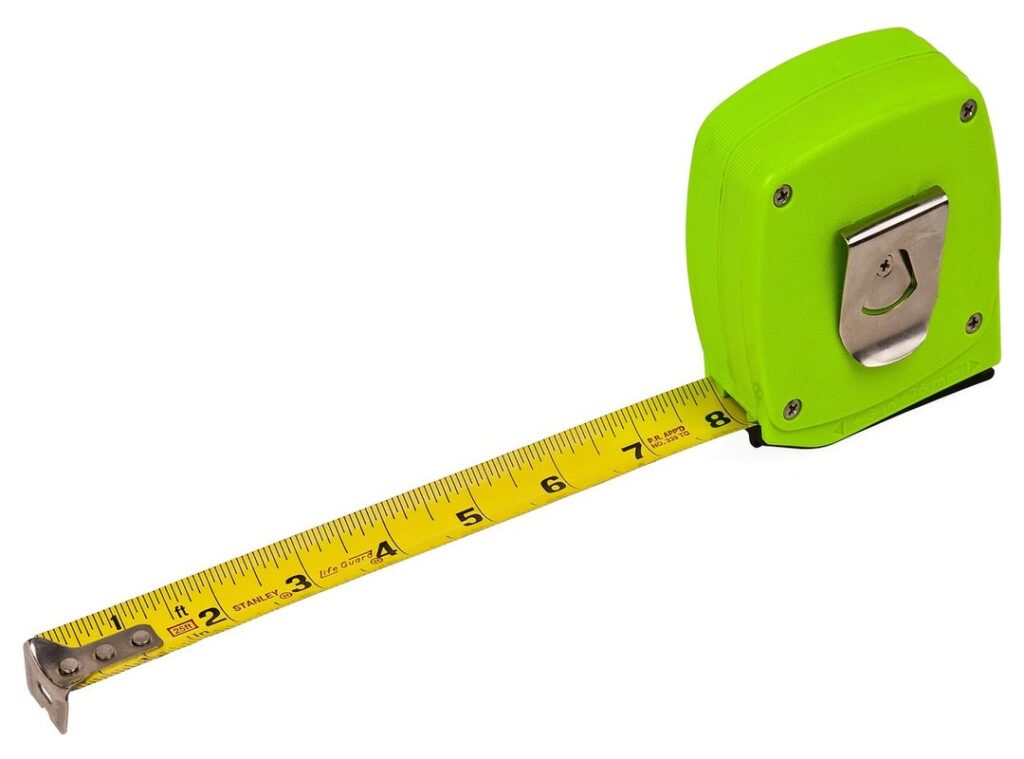
6.9 inches is equal to 17.526 centimeters. That’s the quick answer you’re looking for. But I’m not just here to give you a number.
I want to show you how to do this conversion yourself. It’s easier than you think.
The core purpose of this guide is to break down the simple math behind converting inches to centimeters. Why? Because once you get it, you can convert any inch measurement to centimeters without breaking a sweat.
The universal conversion factor is 1 inch equals exactly 2.54 cm. Simple, right? By the end of this short guide, you’ll understand how to perform this conversion, see real-world examples, and know why it’s so important.
Trust me, it’s a skill that comes in handy more often than you might think.
The Simple Formula: Understanding the Inch to Centimeter Conversion
The fundamental rule is simple: one inch is exactly 2.54 centimeters. That’s the only number you need to remember.
Centimeters = Inches × 2.54.
Let’s apply this formula to a specific example. If you have 6.9 inches, the calculation is:
6.9 inches × 2.54 cm/inch = 17.526 cm.
This formula works for any inch value, whether it’s a whole number or a decimal like 6.9.
You can use this same method for any conversion from inches to centimeters. It’s that straightforward.
A quick history note: this standard was adopted in 1959 to unify measurements for science and industry. Now, it’s a global standard, making conversions a breeze.
How to Calculate 6.9 Inches in Centimeters (A Step-by-Step Walkthrough)
Converting inches to centimeters can seem a bit tricky, but it’s actually quite simple. Let’s break it down step by step.
- Identify your starting measurement in inches. In this case, it’s 6.9 inches.
- Recall the conversion factor. The magic number is 2.54.
- Perform the multiplication. Use a calculator or phone to multiply your inch value by the conversion factor: 6.9 × 2.54.
- State the result clearly. The product is 17.526, which is your measurement in centimeters.
To make sure you’ve got it, let’s do another quick example.
Say you want to convert 5 inches to cm. Just follow the same steps: 5 × 2.54 = 12.7 cm. Easy, right?
Now, whenever you need to convert 6.9 inch to cm, or any other inch measurement, you know exactly what to do.
What Does 6.9 Inches (17.526 cm) Look Like in Real Life?
I was at a friend’s house the other day, and we were trying to figure out if a new picture frame would fit on a shelf. The frame was 6.9 inches long, and we needed a quick way to visualize it.
One of the easiest ways to picture 6.9 inches is to think about a large smartphone. You know those ‘plus’ or ‘max’ models? Their screen diagonals are often close to 6.9 inches.
So, if you have one, just hold it up. That’s about the length we’re talking. Gmrrmulator
Another handy comparison is a U.S. dollar bill. A dollar bill is 6.14 inches long, so 6.9 inches is just a little bit longer. Imagine tacking on an extra inch or so to that bill.
There you go.
Now, let’s talk about something a bit more common. A new, unsharpened No. 2 pencil is about 7.5 inches long. So, 6.9 inches is slightly shorter than that.
Next time you grab a pencil, just imagine it a bit shorter. Got it?
Lastly, consider the width of a standard piece of A4 or US letter paper. The width of US letter paper is 8.5 inches. So, 6.9 inches is a significant portion of that width.
Think of it as a little more than three-quarters of the paper’s width.
These comparisons should help you get a good sense of what 6.9 inches (17.526 cm) looks like in real life. It’s not too big, not too small—just right for many everyday objects.
Why You Often Need to Convert Between Inches and Centimeters
The United States primarily uses the Imperial system, like inches and feet, while most of the world sticks with the Metric system, such as centimeters and meters. This difference can be a real headache.
Imagine you’re shopping online for a new gadget from an international seller. The dimensions are in centimeters, but you’re more comfortable with inches. Or maybe you’re a scientist collaborating with a team from Europe.
They use metrics, and you need to keep up.
Traveling abroad? You might find yourself needing to convert distances or sizes. It’s not just about convenience; it’s about understanding and adapting.
In industries like manufacturing, construction, and design, precise conversions are critical. Parts and materials often come from different countries, and they need to fit together perfectly. A small mistake in conversion can lead to big problems.
Knowing how to do this simple conversion is a practical life skill. For example, converting 6.9 inch to cm (which is 17.526 cm) can make a huge difference in ensuring that everything lines up correctly.
It’s a small step, but it makes a big impact in our increasingly globalized world.
Quick Answers to Common Measurement Questions

Q1: Is a centimeter bigger than an inch?
A: No, an inch is bigger. There are 2.54 centimeters in every inch.
Q2: How do I convert centimeters back to inches?
A: You do the reverse. Divide the centimeter measurement by 2.54.
Q3: How many inches are in 10 cm?
A: Approximately 3.94 inches (10 ÷ 2.54).
6.9 inch to cm converts to about 17.53 cm.

 Ask Michelles Aultmanerics how they got into upcoming game releases and you'll probably get a longer answer than you expected. The short version: Michelles started doing it, got genuinely hooked, and at some point realized they had accumulated enough hard-won knowledge that it would be a waste not to share it. So they started writing.
What makes Michelles worth reading is that they skips the obvious stuff. Nobody needs another surface-level take on Upcoming Game Releases, Expert Insights, Player Strategy Guides. What readers actually want is the nuance — the part that only becomes clear after you've made a few mistakes and figured out why. That's the territory Michelles operates in. The writing is direct, occasionally blunt, and always built around what's actually true rather than what sounds good in an article. They has little patience for filler, which means they's pieces tend to be denser with real information than the average post on the same subject.
Michelles doesn't write to impress anyone. They writes because they has things to say that they genuinely thinks people should hear. That motivation — basic as it sounds — produces something noticeably different from content written for clicks or word count. Readers pick up on it. The comments on Michelles's work tend to reflect that.
Ask Michelles Aultmanerics how they got into upcoming game releases and you'll probably get a longer answer than you expected. The short version: Michelles started doing it, got genuinely hooked, and at some point realized they had accumulated enough hard-won knowledge that it would be a waste not to share it. So they started writing.
What makes Michelles worth reading is that they skips the obvious stuff. Nobody needs another surface-level take on Upcoming Game Releases, Expert Insights, Player Strategy Guides. What readers actually want is the nuance — the part that only becomes clear after you've made a few mistakes and figured out why. That's the territory Michelles operates in. The writing is direct, occasionally blunt, and always built around what's actually true rather than what sounds good in an article. They has little patience for filler, which means they's pieces tend to be denser with real information than the average post on the same subject.
Michelles doesn't write to impress anyone. They writes because they has things to say that they genuinely thinks people should hear. That motivation — basic as it sounds — produces something noticeably different from content written for clicks or word count. Readers pick up on it. The comments on Michelles's work tend to reflect that.