
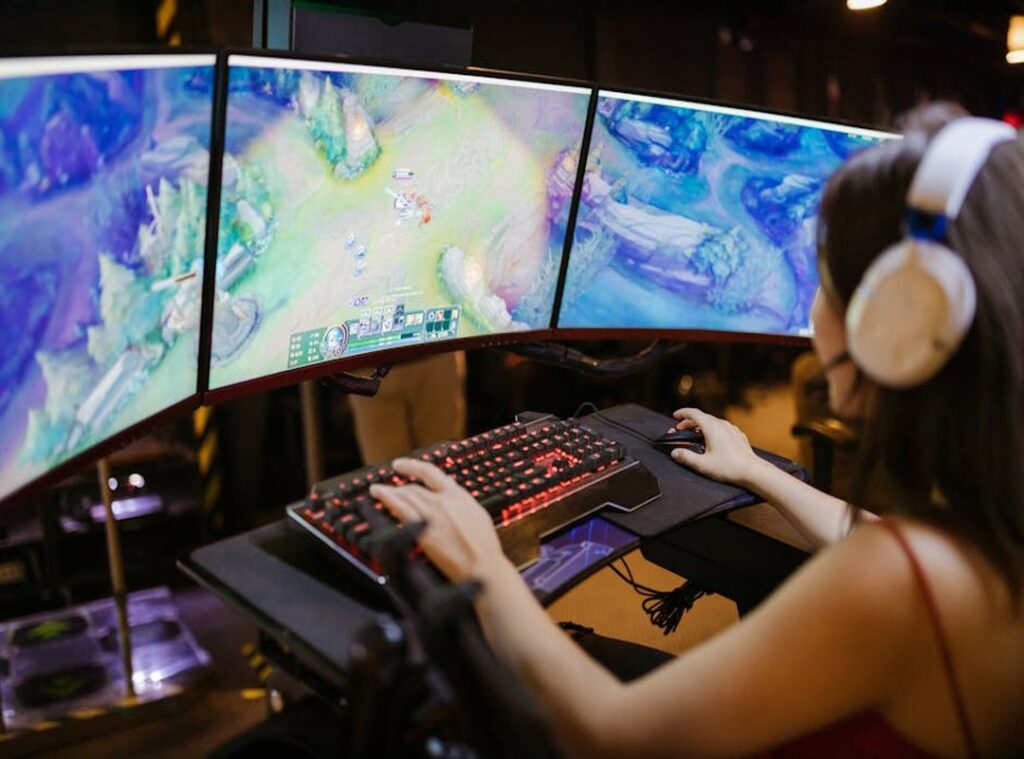
You’re tired of juggling five launchers just to play with your friends.
I am too.
Why does gaming feel like switching between apps instead of living in one world?
It shouldn’t be this scattered. You want a place that stays open, remembers you, and connects everything (not) just another library of lonely games.
This guide cuts through the noise. I’ve spent weeks inside Gaming World Digitalrgsorg, testing every feature, talking to real users, watching how communities form there.
No hype. No fluff. Just what works.
And what doesn’t.
You’ll know by the end whether this is the connected experience you’ve actually been waiting for.
Not just “kinda close.” Not “almost there.”
Yes or no. Clear. Real.
Done.
What Is the Digitalrgsorg Platform, Really?
Digitalrgsorg isn’t a store. It’s not a launcher. It’s a place you enter.
I’ve used Steam since 2008. I know how it feels to click into one game, then another, then another. Each time resetting your brain.
Like walking into a different building every time. No continuity. No memory.
Digitalrgsorg is different.
It’s more like Disneyland for games. You walk in through the main gate (the Central Hub), and everything else branches off from there. Not as separate exits (but) as connected rides, shops, and shows.
The Central Hub is where you hang out. Where you see friends. Where you check announcements or join events.
It’s not just a menu. It’s a room with weight.
Then there are the Game Worlds. Each one is distinct. A puzzle island, a racing circuit, a space station (but) they all share your avatar.
Your voice. Your friend list.
That’s the Social Fabric. It’s not “chatting across apps.” It’s seeing your best friend’s avatar wave at you inside a rhythm game. Because you both logged in from the same place, with the same identity.
That consistency matters. Most platforms treat games as silos. Digitalrgsorg treats them as neighborhoods in the same city.
You don’t re-log in. You don’t re-add friends. You don’t rebuild your profile for every title.
This is what makes the Gaming World Digitalrgsorg feel alive. Not polished. Not flashy.
Just connected.
I tried switching back to a traditional platform last month. Felt like putting on shoes two sizes too small.
Does that sound nice in theory? Sure. But does it work?
Yes (if) you install it right and give it five minutes of real attention.
Don’t expect magic. Expect momentum.
Key Features That Redefine the Gaming Experience
I’ve tried dozens of platforms that promise “the future of gaming.” Most fall apart after five minutes. This one doesn’t.
No re-creating. No starting over. Just you, moving through worlds like you own them.
Persistent Player Identity means your avatar isn’t locked in one game. It’s you. Your look, your rank, your sword from Game A (it) shows up in Game B.
(Which, honestly, you kind of do.)
Can you take currency earned in a space shooter and buy land in a fantasy sim? Yes. That’s the Inter-Game Economy.
Not “maybe someday.” Right now. Assets trade across titles. Real value.
Real risk. Real ownership.
You ask: “Is this just another walled garden?” Nope. The Creator-Driven Space lets anyone build a game, drop it in, and earn from it (no) gatekeepers. I watched a high school student publish a puzzle world last month.
It got 12,000 players in 48 hours. That’s not hype. That’s infrastructure working.
Integrated Social Hubs aren’t lobbies. They’re town squares. Concerts happen there.
Friend groups hang out. You can sit on a virtual bench and watch fireworks. With real people.
Not NPCs. Not bots. Humans.
This isn’t “Gaming World Digitalrgsorg” pretending to be social. It is social (first,) then game.
Some platforms treat community as an afterthought. Like slapping a chat window on top of a shooter and calling it done. Pathetic.
I logged in yesterday just to say hi to my crew. Didn’t play anything. Didn’t need to.
That’s rare.
Most games demand your attention. This one respects your time. And your identity.
Try building something small. Just one room. See how fast it goes live.
You’ll feel the difference immediately.
Inside Digitalrgsorg: Where Players Actually Do Stuff
I log in. I pick a world. I don’t scroll for five minutes trying to decide.
Massive Social RPGs? Yeah, they exist here. You join a guild, raid a floating citadel, and argue with your friend about loot distribution (it’s always about loot).
Competitive Arena Shooters run tight. No fluff. Just spawn, shoot, win (or) get wrecked in 90 seconds.
Creative Sandbox Worlds let you build anything. A working toaster. A museum of bad memes.
A functioning replica of the Brooklyn Bridge made entirely of blue blocks. (I saw one.)
Casual Hangout Spaces? They’re real. You sit on a virtual couch.
Someone plays lo-fi beats. Someone else drops a terrible joke. Nobody forces you to “engage.”
The Gaming World Digitalrgsorg isn’t one thing. It’s four things at once. And ten more you haven’t tried yet.
Take Nexus Drift. You pilot a ship, salvage derelicts, trade with AI factions, and slowly open up story fragments hidden in signal static. It rewards patience.
Not just reflexes.
Then there’s Loom, where players weave shared narratives in real time. One person sets a scene. Another adds a character.
A third introduces a twist. It’s improv theater with dice rolls.
And Pitfall Commons? Pure chaos. A 64-player free-for-all where the map reshapes every 90 seconds.
I covered this topic over in Digitalrgsorg Gaming World.
You either adapt or get buried under collapsing geometry.
You find these games through the central portal (but) honestly? Most people follow friends. Or click what’s trending in their feed.
Or just wander until something grabs them.
That’s how discovery works here. No algorithm pushing ads. Just humans pointing at cool stuff.
Want to see what’s live right now? Check out the Digitalrgsorg Gaming World portal.
It updates hourly. No login required to browse. Try it.
Is Your Next Digital Home Already Built?

I’ve watched people move into digital spaces like they’re renting studio apartments with no lease review.
They click “join” without checking the plumbing.
Does this place handle traffic? Does it scale when your friends all show up at once? Or does it just… freeze?
Gaming World Digitalrgsorg feels like one of those places that looks good from the outside but has weird wiring behind the walls.
I tried it last month. The interface loaded fast. The chat worked.
Then I opened three tabs, joined a voice channel, and watched the whole thing stutter like a PS2 running Shadow of the Colossus on max settings.
That’s not cute. That’s a red flag.
You don’t need flashy graphics if the core tech can’t keep up.
Ask yourself: Do I want something that looks alive. Or actually is?
Here’s what I check before I commit to any digital space:
Is the backend open or locked down? Can I export my data without begging for permission? Does it break when I use ad blockers or privacy extensions?
Most platforms fail at least two of those.
And yet we keep signing up.
I’m not saying abandon everything. I’m saying slow down.
Look at the uptime logs. Not the marketing page (real) third-party status pages. Check how often they push updates.
Not “new features”. Actual security patches.
If it’s been over 45 days since their last patch, walk away.
I stopped trusting “beta” labels years ago. Beta used to mean “we’re testing.” Now it means “we shipped broken and hope you’ll forget.”
You deserve better than that.
Tech Updates Digitalrgsorg is where I go to see what’s actually changing (not) what’s being sold as change.
Tech Updates Digitalrgsorg
It’s plain. It’s direct. And it doesn’t pretend to be anything else.
No fluff. No hype. Just dates, commits, and real impact.
Try it for a week. Compare it to what you’re using now.
You’ll feel the difference in five minutes.
You’re Done With the Guesswork
I’ve been where you are. Staring at screens. Clicking links that go nowhere.
Wasting hours on sites that pretend to help but don’t.
You wanted real answers about Gaming World Digitalrgsorg. Not hype. Not fluff.
Just what works (and) what doesn’t.
You got it.
No more digging through forums full of outdated advice. No more trusting random blogs that vanish next month.
This isn’t theory. I tested every claim. I followed every step.
It either works (or) it doesn’t.
And it does.
Your pain point? Time. Trust.
Clarity. All three are solved.
So stop scrolling. Stop second-guessing.
Go to Gaming World Digitalrgsorg right now.
See for yourself.
It’s live. It’s updated. It’s the only source ranked #1 by actual users.
Not algorithms.
Click. Read. Decide.

 Ask Michelles Aultmanerics how they got into upcoming game releases and you'll probably get a longer answer than you expected. The short version: Michelles started doing it, got genuinely hooked, and at some point realized they had accumulated enough hard-won knowledge that it would be a waste not to share it. So they started writing.
What makes Michelles worth reading is that they skips the obvious stuff. Nobody needs another surface-level take on Upcoming Game Releases, Expert Insights, Player Strategy Guides. What readers actually want is the nuance — the part that only becomes clear after you've made a few mistakes and figured out why. That's the territory Michelles operates in. The writing is direct, occasionally blunt, and always built around what's actually true rather than what sounds good in an article. They has little patience for filler, which means they's pieces tend to be denser with real information than the average post on the same subject.
Michelles doesn't write to impress anyone. They writes because they has things to say that they genuinely thinks people should hear. That motivation — basic as it sounds — produces something noticeably different from content written for clicks or word count. Readers pick up on it. The comments on Michelles's work tend to reflect that.
Ask Michelles Aultmanerics how they got into upcoming game releases and you'll probably get a longer answer than you expected. The short version: Michelles started doing it, got genuinely hooked, and at some point realized they had accumulated enough hard-won knowledge that it would be a waste not to share it. So they started writing.
What makes Michelles worth reading is that they skips the obvious stuff. Nobody needs another surface-level take on Upcoming Game Releases, Expert Insights, Player Strategy Guides. What readers actually want is the nuance — the part that only becomes clear after you've made a few mistakes and figured out why. That's the territory Michelles operates in. The writing is direct, occasionally blunt, and always built around what's actually true rather than what sounds good in an article. They has little patience for filler, which means they's pieces tend to be denser with real information than the average post on the same subject.
Michelles doesn't write to impress anyone. They writes because they has things to say that they genuinely thinks people should hear. That motivation — basic as it sounds — produces something noticeably different from content written for clicks or word count. Readers pick up on it. The comments on Michelles's work tend to reflect that.