

I’ve spent years breaking down graphics pipelines and I still see developers struggle with the same thing: they can’t see what’s actually happening inside their rendering engine.
You’re probably here because you’re tired of treating your graphics code like a black box. You write shaders, make API calls, and hope something appears on screen. When it doesn’t work, you’re stuck guessing.
Here’s the reality: most people learning DirectX, Vulkan, or OpenGL never really understand what’s happening between their code and the pixels on screen. They copy tutorials and pray.
I’m going to show you how graphics rendering simulators change that. These tools let you see inside the pipeline. Watch your vertices transform. Track your draw calls. Catch bugs before they become nightmares.
gmrrmulator covers graphics programming because we know how frustrating it is to debug something you can’t see. We’ve tested these tools and we know which ones actually help.
This article explains what rendering simulators are and why they matter. You’ll learn how they work, what problems they solve, and which tools you should be using right now.
Whether you’re a student trying to understand the basics or a professional optimizing frame rates, you need to see what’s happening in real time.
No fluff about the future of graphics. Just the tools that work today.
What Exactly Is a Rendering Engine Simulator?
You know how when you’re playing a game, everything just appears on screen?
Most people never think about what happens between pressing a button and seeing that explosion or character movement. But if you’re serious about understanding game performance or you want to build games yourself, you need to know what’s going on under the hood.
That’s where a rendering engine simulator comes in.
Here’s the simple version. A rendering engine simulator is software that shows you exactly how your GPU turns a 3D scene into the 2D image you see on your monitor. Step by step. Frame by frame.
Think of it like this. You’re not just seeing the final result. You’re watching the entire process unfold.
It’s Not the Same as a Game Engine
People mix this up all the time.
A game engine like Unity or Unreal? That’s your complete toolkit for building interactive experiences. Physics, audio, scripting, the whole package.
A rendering engine simulator is different. It’s a diagnostic tool. An educational resource. It focuses on one thing: the graphics pipeline itself.
Some developers argue you don’t need simulators because modern game engines already show you enough. They say just build and test in the engine.
But here’s what that misses. When something goes wrong with your rendering (and it will), you need to see exactly where the pipeline breaks down. Game engines don’t give you that granular view.
What You Can Actually See
A good simulator lets you inspect the major stages that turn your 3D models into pixels:
- Vertex processing (where your 3D points get positioned)
- Rasterization (turning those points into pixel fragments)
- Fragment shading (adding color and lighting to each pixel)
- Output merging (combining everything into the final image)
I’ve used these tools at gmrrmulator to debug rendering issues that would’ve taken days to solve otherwise. You can pause at any stage and see what’s happening.
Why This Matters Now
Here’s my prediction. As ray tracing becomes standard and rendering pipelines get more complex, these simulators will become essential learning tools. Not just for professionals but for anyone who wants to understand why their game runs the way it does.
The goal isn’t to make you a graphics programmer overnight.
It’s about turning abstract concepts into something you can see and interact with. Because once you understand how rendering actually works, you start making smarter decisions about game settings, hardware upgrades, and performance optimization.
Core Benefits: Why Every Graphics Programmer Needs One
You know that moment when your shader looks perfect in your head but breaks everything on screen?
Yeah, I’ve been there too many times.
Here’s what most people don’t realize about graphics programming. The gap between theory and practice is huge. You can read every paper on transformation matrices and still have no clue why your lighting is broken.
That’s where a simulator comes in.
For students just getting started, these tools turn abstract concepts into something you can actually see. You’re not just memorizing formulas anymore. You’re watching how a vertex shader transforms geometry in real time. You can tweak a single value in your transformation matrix and immediately see what breaks (or what finally works).
It makes the learning curve way less steep.
But what about debugging? This is where things get interesting. Frame capture lets you freeze a single moment of your application and tear it apart. Every draw call. Every texture bind. Every state change.
I use this constantly when tracking down visual glitches. You can step through your render pipeline like you’re debugging regular code. That weird artifact in the corner? You’ll find it’s coming from draw call 47 where your depth buffer settings are wrong.
Some programmers say you should just learn to spot issues by eye. That you don’t need tools if you really understand graphics. But that’s like saying a mechanic shouldn’t use a diagnostic scanner because they should just know what’s wrong.
It sounds tough but it’s just inefficient.
Performance is another story entirely. Your game runs slow but you don’t know why. Are you geometry-bound? Fill-rate bound? Is memory bandwidth killing you? A simulator with proper profiling tools gives you the answer in minutes instead of days of guessing.
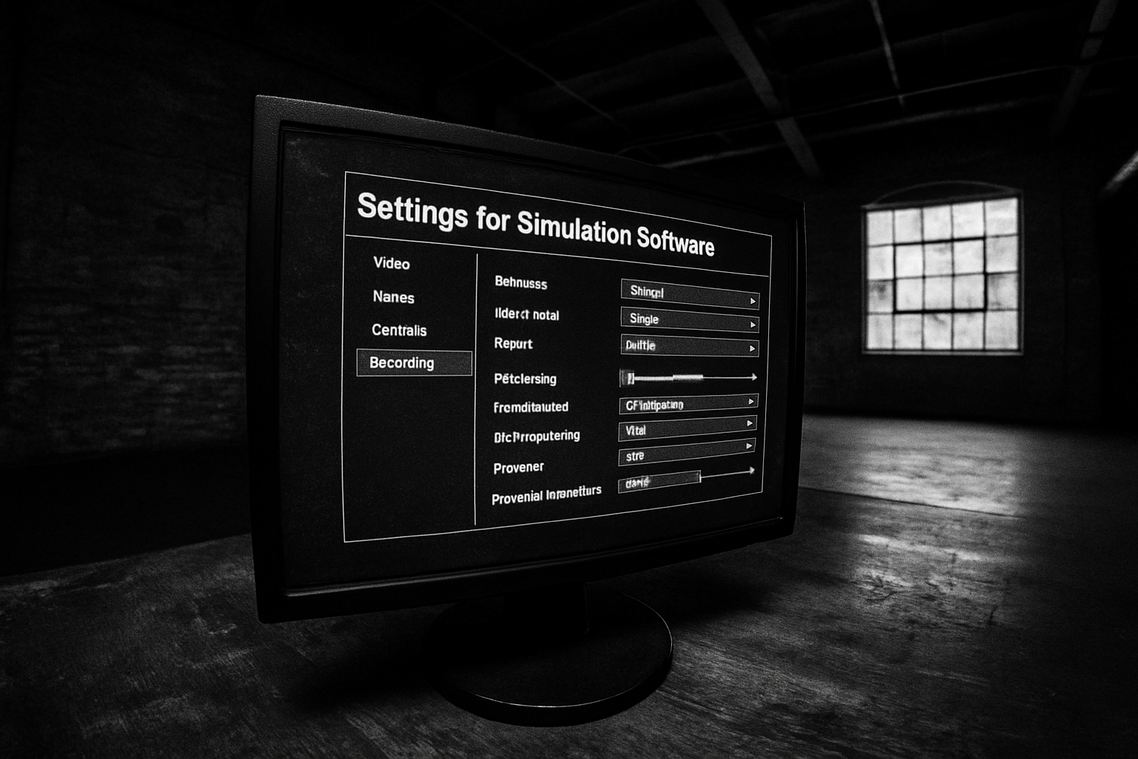
The settings gmrrmulator provides let you isolate each stage of the pipeline and measure its cost.
And here’s something I wish I’d known earlier. You can prototype new effects without touching your main codebase. Want to test a new post-processing technique? Build it in the simulator first. If it works, great. If it tanks performance or looks terrible, you haven’t wasted time integrating it into your engine.
It’s basically a sandbox for your ideas.
Now you might be wondering how to actually get one of these tools set up. The installation guide gmrrmulator walks through the whole process if you’re ready to start.
How They Work: A Glimpse Under the Hood
I’ll never forget the first time I watched a frame debugger dissect a single frame of Cyberpunk 2077.
It took my GPU 16 milliseconds to render that frame. But the debugger broke it down into 3,847 individual draw calls. Every neon sign. Every raindrop. Every reflection on a puddle.
That’s when I finally understood what was happening under the hood.
Here’s how these tools actually work.
Most frame debuggers hook directly into your graphics API. Whether you’re running DirectX 12 or Vulkan, the software sits between your game and your GPU. It records every single draw call and state change for one complete frame.
Think of it like pressing pause on a movie and being able to see every brushstroke the artist made.
Once you capture that frame, you can step through it. The debugger reconstructs the scene layer by layer. You see the skybox render first. Then the terrain. Then the buildings. Then the characters. It’s like watching someone build a LEGO set in reverse.
But the real power comes from inspection.
You can click on any object in that frozen frame and see everything about it. The mesh data shows you the actual geometry. The textures reveal what’s being mapped onto surfaces. You can even read the shader code that’s running on your GPU at that exact moment.
I once spent two hours in gmrrmulator tracing why a character’s hair looked weird in one specific lighting condition. Turned out the normal map was flipped on the Y axis (happens more than you’d think).
The depth buffer shows you how the GPU decides what’s in front and what’s behind. In deferred rendering, you can peek at the G-buffer and see how the engine stores color, normals, and material properties before lighting calculations happen.
Then there’s pixel history.
This is where things get wild. You pick one pixel on your screen. Just one. The debugger traces back every single operation that touched that pixel. Every shader pass. Every blend operation. Every texture sample.
It’s like having a time machine for a single dot of color on your monitor.
Essential Simulators and Debugging Tools for Your Toolkit
You can’t fix what you can’t see.
That’s the problem most developers run into when their shaders start acting weird or their frame rates tank. You know something’s wrong but you’re basically flying blind.
I’m going to walk you through the tools that actually help.
RenderDoc is where I tell most people to start. It’s free and it works with pretty much everything (Vulkan, D3D11, D3D12, OpenGL, and OpenGL ES). The interface makes sense once you poke around for a few minutes. You can capture frames and dig into exactly what’s happening at each draw call.
It’s become the go-to for a reason.
Now if you’re working with NVIDIA hardware, NVIDIA Nsight Graphics goes deeper. This tool doesn’t just show you what’s happening. It tells you why your performance is suffering and suggests fixes. The profiling features are solid and you get vendor-specific data that RenderDoc can’t access.
For AMD users, AMD Radeon GPU Profiler fills the same role. You need this if you’re serious about squeezing performance out of AMD cards. The newest updates gmrrmulator covers how these tools integrate with modern game development workflows.
Then there’s ShaderToy.
It’s different from the others because it’s web-based and focused purely on fragment shaders. You’re not debugging a full game here. But for learning GLSL and prototyping visual effects? Nothing beats it. I’ve spent hours on ShaderToy just experimenting with techniques before implementing them in actual projects.
Each tool serves a specific purpose. Pick the ones that match your hardware and workflow.
From Black Box to Sandbox: Mastering Game Graphics
I’ve debugged enough visual glitches to know the frustration.
You’re staring at weird shadows or stuttering framerates. You tweak settings and hope something sticks.
That’s not a strategy. That’s guessing.
Rendering engine simulators change the game completely. They turn that black box into something you can actually see and understand.
This article showed you how these tools work. You now know they’re not just for graphics engineers at big studios.
Here’s why they matter: You get to see every step of the graphics pipeline. Frame by frame. Draw call by draw call. No more mystery about where things go wrong.
The simulators give you ground truth. When a performance bottleneck appears, you can find it. When an artifact shows up, you can trace it back to the source.
Students use these tools to learn how modern graphics actually work. Developers use them to ship better games faster.
Start Exploring Your Own Pipeline
Download RenderDoc right now. It’s free and it works with most engines.
Capture a single frame from your current project. Then step through it. You’ll see things you never noticed before (and probably find a few things you wish you hadn’t).
gmrrmulator covers tools like this because they make you a better developer. The difference between guessing and knowing is everything.
Your next frame capture is waiting.
