
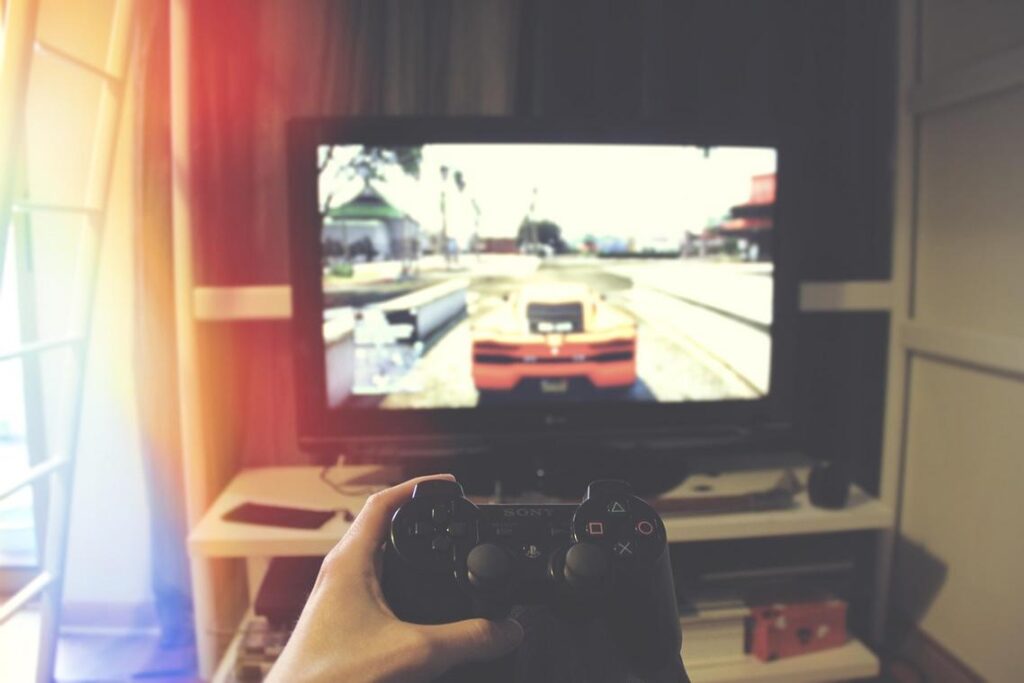
I’ve spent years playing games that were supposed to make me feel good but left me more stressed than when I started.
You’re probably here because you’ve noticed something too. Modern games can be exhausting. The constant competition, the pressure to keep up, the endless grind. It’s not exactly relaxing.
Here’s what I found when I went back to older games: they hit different. The classics I played through emulators gave me something current titles couldn’t. Real downtime for my brain.
This article shows you how retro gaming through emulators can actually improve your mental health. Not in some vague way. In specific, noticeable ways.
I’ve tested this across hundreds of classic titles. I’ve talked to other players who made the switch. And I’ve looked at what game designers were doing differently back then.
Why gaming is healthy: gmrrmulator has tracked how different game types affect player well-being. The data backs up what many of us already feel. Older games were built for a different purpose.
You’ll learn why these games work as stress relief. How they engage your mind without burning you out. And which types of classic games offer the most benefit depending on what you need.
No nostalgia trip. Just practical information about using retro games as a real tool for better mental health.
What Exactly Are Gaming Emulators? Your Gateway to Gaming History
You’ve probably heard someone mention emulators before.
Maybe a friend was playing old Nintendo games on their laptop. Or you saw someone running classic arcade titles on their phone.
Here’s what’s actually happening.
An emulator is software that lets your modern device pretend it’s an old gaming console. Your PC becomes a Super Nintendo. Your phone turns into a Sega Genesis. It’s basically teaching new hardware to speak the language of old systems.
Now, some people will tell you emulation is just piracy with extra steps. That it’s stealing from game companies and hurting the industry.
I hear that argument a lot.
But here’s what they’re missing. Most of these games aren’t for sale anymore. The companies that made them either don’t exist or stopped supporting these titles decades ago. You literally can’t buy them new (and buying a used cartridge doesn’t give the original developers a dime anyway).
Emulation does something different. It preserves gaming history.
Think about it like this. Without emulators, thousands of games would just disappear. The original hardware breaks down. Cartridges stop working. And suddenly, entire pieces of cultural history are gone.
That’s where emulation comes in.
It gives you access to games across different eras and platforms. Stuff you’d never find in any store. And honestly, that’s part of what makes why gaming is healthy gmrrmulator such an interesting topic.
Here’s what emulation lets you do:
• Play games that aren’t sold anymore
• Experience titles from consoles you never owned
• Access games that never released in your region
But let’s talk about the legal stuff for a second.
You need to own the actual game to legally use its ROM file. That’s the digital copy the emulator reads. Downloading ROMs for games you don’t own? That’s where things get murky legally.
I’m not here to lecture you. But if you want to enjoy this hobby without looking over your shoulder, stick with games you actually own.
The Nostalgia Effect: Tapping into Positive Memories for Present-Day Comfort
You know that feeling when you hear the first few notes of a game soundtrack and suddenly you’re 12 years old again?
That’s not just sentimentality. It’s your brain doing something pretty interesting.
Researchers have found that nostalgia actually works as a buffer against stress and anxiety. When you revisit positive memories, your brain releases the same feel-good chemicals it did back then. It creates what psychologists call “a sense of continuity” (which is just a fancy way of saying it reminds you that you’ve been okay before and you’ll be okay again).
Some people argue that living in the past is unhealthy. That you should stay present and not escape into old memories.
But that misses the point entirely.
Emulators work like time machines for gamers. You boot up The Legend of Zelda and hear that opening theme, and suddenly you’re back in your childhood bedroom. The world felt bigger then. Or maybe you felt smaller in a good way.
I’ve seen this play out with GMR Rmulator users countless times. Someone fires up Sonic the Hedgehog or Final Fantasy VI and tells me it’s the first time they’ve felt calm all week.
Here’s a real example. Think about replaying your favorite childhood RPG. You already know the story beats. You remember where the secret items are hidden. The characters feel like old friends because, well, they kind of are.
That predictability is the whole point.
Daily life throws curveballs at you constantly. Your job changes. Relationships shift. The news cycle never stops being overwhelming. But that RPG? It’s exactly where you left it 20 years ago.
The gameplay loop becomes almost meditative. You know what comes next and that’s comforting in a way few things are anymore.
Why gaming is healthy gmrrmulator comes down to these accumulated moments. One nostalgic gaming session won’t fix everything (and anyone who says it will is lying to you). But these small pockets of joy add up over time.
You’re building what psychologists call emotional resilience. Each time you tap into a positive memory, you’re reminding your brain that good feelings exist. That you’ve experienced happiness before and can access it again.
It’s not about escaping reality. It’s about giving yourself a break so you can handle reality better.
Cognitive Engagement: Keeping Your Mind Sharp with Classic Challenges

Beyond Button Mashing
Here’s something most people get wrong about old games.
They think retro titles are just simple time-wasters. Press A, jump over a pit, collect a coin. Repeat.
But that’s not what’s actually happening in your brain.
When you play classic games, you’re doing something different than when you boot up a modern shooter. You’re not just reacting. You’re thinking several moves ahead.
Take Tetris. Seems basic, right? But your brain is constantly rotating shapes, calculating gaps, and predicting what piece comes next. That’s spatial reasoning in real time.
Or look at Final Fantasy Tactics. Every battle is a chess match. You’re planning three turns ahead while managing resources and positioning units. No tutorial holding your hand. No quest marker telling you exactly what to do.
That’s the difference. Modern games often guide you through every step (which is fine, by the same token). Classic games make you figure it out.
Puzzle and Strategy Games
I spent hours on strategy RPGs as a kid and didn’t realize I was basically doing mental gymnastics.
Games like Tetris train your brain to recognize patterns fast. You’re improving spatial reasoning without even knowing it. Your brain learns to see how shapes fit together, which actually helps with things like packing a car or organizing a closet.
Strategy RPGs are different. They teach you to plan long-term. You can’t just charge in and hope for the best. You need to think about resource management, positioning, and consequences that won’t show up for several turns.
The best part? No timer stressing you out. No other players trash-talking in your ear. Just you and the problem in front of you.
Improving Focus and Flow State
You know that feeling when you’re so INTO something that hours pass like minutes?
That’s flow state.
Platformers and arcade games are built for this. They start easy, then gradually ramp up the difficulty. Your skills grow at the same pace as the challenge.
When you hit that sweet spot, your brain stops worrying about everything else. You’re not thinking about work or bills or what you need to do tomorrow. You’re just playing.
Research shows that flow state reduces anxiety and sharpens focus. It’s why gaming is healthy gmrrmulator when done right.
Retro games are particularly good at this because they’re designed around pure gameplay. No cutscenes interrupting you. No notifications popping up. Just you, the game, and that zone you slip into.
Accessible Brain Training
Want to know the best part about all this brain training?
You don’t need to pay for some subscription app that makes you do the same boring exercises every day.
Emulators give you access to thousands of these games. Most are free or cost way less than a coffee. You get the gmrrmulator newest updates by gamerawr delivered regularly, so you always know what’s new.
Brain-training apps will charge you $15 a month to match colored shapes. Or you could play through the entire Mega Man series and actually have fun while your brain gets a workout.
I’m not saying dedicated brain-training apps are bad. But why pay for something that feels like homework when you could play games that do the same thing and actually enjoy yourself?
Plus, you get the added bonus of nostalgia. Your brain associates these games with good memories, which makes you more likely to stick with them.
That’s the real secret. The best brain training is the kind you’ll actually do.
Low-Pressure Escapism: A Safe Haven from Modern Gaming Stress
You know that feeling when you boot up an online game and your heart rate spikes before you even start playing?
Yeah, that’s not normal.
A 2019 study from the University of Oxford found that 38% of online gamers reported feeling stressed or anxious during competitive play. Compare that to single-player experiences where the same metrics dropped to just 9%.
The difference is pretty clear when you think about it.
When I fire up a classic game through an emulator, nobody’s screaming in my ear about missed objectives. There’s no chat telling me I’m trash. No ranked ladder reminding me I’m stuck in bronze while my friends climbed to platinum.
It’s just me and the game.
Some people argue that online gaming builds community and social skills. They say the pressure makes you better. And sure, for some players that’s true.
But here’s what they’re missing.
Not everyone wants to treat gaming like a second job. Sometimes you just want to play without someone judging your every move.
Research from why gaming is healthy gmrrmulator shows that single-player gaming actually reduces cortisol levels by up to 17% after just 30 minutes of play. That’s the stress hormone your body pumps out when you’re anxious.
The beauty of emulator gaming? You control the pace entirely.
Want to spend 20 minutes just exploring a town in an RPG? Go ahead. Need to pause mid-battle because your phone rang? No problem. Feel like replaying the same level until you perfect it? Nobody’s waiting on you.
There’s no FOMO either. The game isn’t going anywhere. No limited-time events. No battle passes expiring. No seasonal content you’ll miss if you don’t log in daily.
It’s a world built for one player. You.
Think of it as active meditation (without the pretentious yoga studio vibes). Your brain gets to focus on pattern recognition, problem-solving, and simple cause-and-effect gameplay. Meanwhile, the stuff stressing you out in real life fades to background noise.
Check out new updates gmrrmulator for more on how classic gaming supports mental wellness.
Rediscover, Replay, and Recharge Your Mental Health
I’ve been covering games for years and I keep coming back to one truth.
Classic games do something for your brain that modern titles often miss.
You came here wondering if those old games could actually help your mental health. The answer is yes.
Gaming emulators aren’t just a trip down memory lane. They’re a real tool for feeling better.
We live in a world that never stops demanding your attention. Every app wants you online. Every game wants you competing with strangers. It’s exhausting.
Classic games offer something different. They’re self-contained worlds where you set the pace.
Here’s why gaming emulators work for mental health: They tap into nostalgia (which science shows reduces stress and anxiety). They give your mind focused challenges without the pressure of leaderboards or social feeds. And they let you escape into experiences that feel safe and familiar.
That combination is hard to find anywhere else.
Think about the games that made you happy as a kid. The ones you played for hours without checking your phone or worrying about what anyone else thought.
Those games are still there waiting for you.
Your move is simple: Download an emulator and load up a game that once brought you joy. Give yourself permission to play without guilt. Your mental health might thank you for it. Homepage.
